Michigan Restaurant Workers
Michigan workers qualified One Fair Wage for the 2018 ballot. The legislature gutted it, and the state Supreme Court restored it in 2024 — but on the eve of the phase-out, a February 2025 legislative deal preserved a tipped subminimum wage instead of ending it. OFW is fighting to finish the job and build toward $25 for all by 2028.
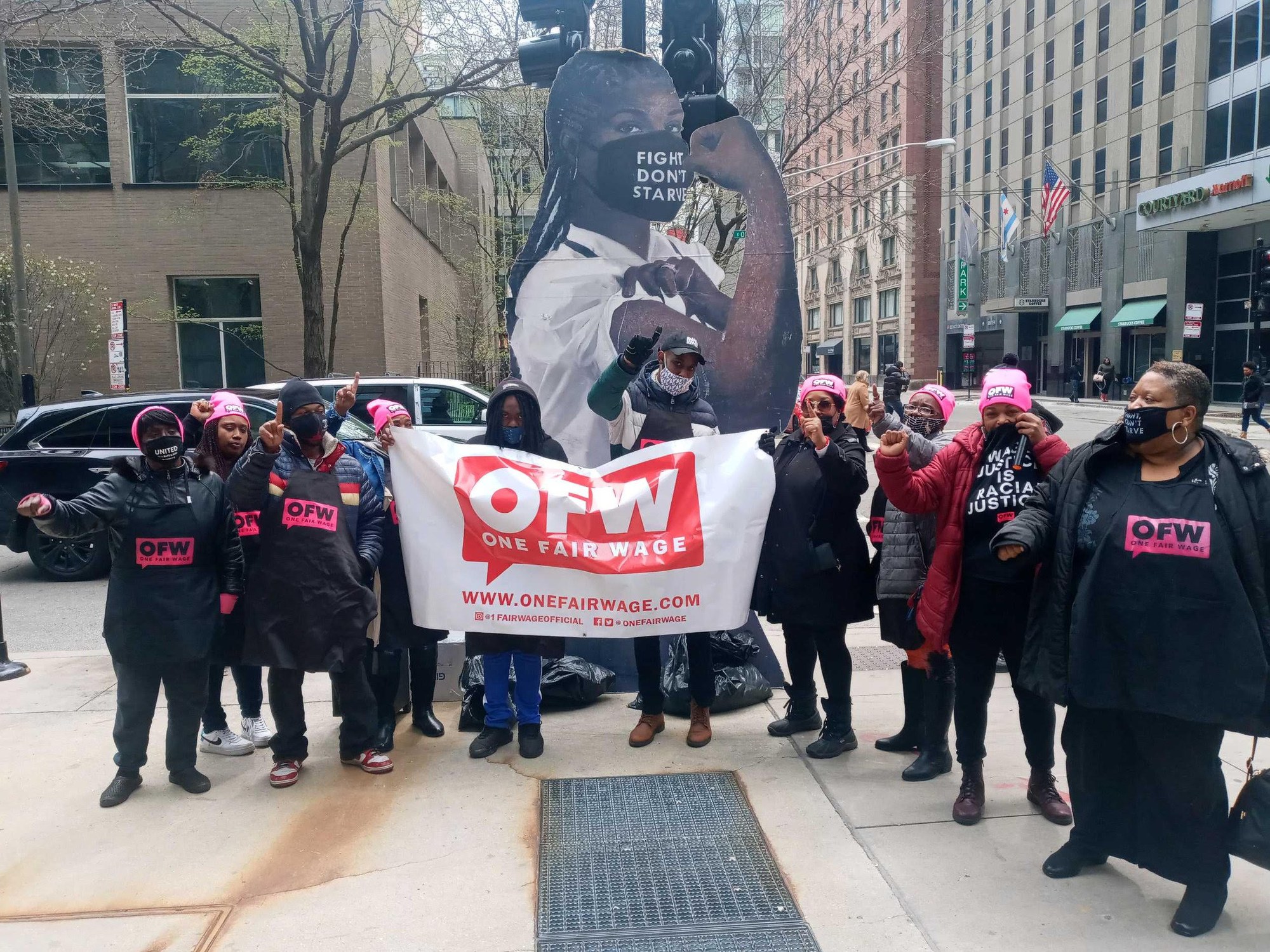 OFW Michigan organizing — the network behind the 2024 court win.
The fight
Michigan workers qualified One Fair Wage for the 2018 ballot by citizen initiative. The legislature adopted the measure to keep it off the ballot, then gutted it. The Michigan Supreme Court ruled in 2024 to restore the original ballot measure, which would have phased out the tipped subminimum wage entirely by 2030. The phase-out was due to begin February 21, 2025.
That ruling is now under sustained pressure. A February 2025 legislative compromise halted the phase-out at 50% instead of fully eliminating the tipped subminimum — an industry-lobby win. OFW is defending the rest of the gain. Meanwhile, a coalition of OFW, key local groups, and unions is organizing for $25 across the state.
Who’s affected
163,000+ Michigan tipped workers — 74% women, 21% people of color — were paid $3.93/hour as the subminimum tipped wage when the 2024 ruling came down, and are still paid a subminimum today — 40% of the state minimum wage in 2026 under the February 2025 deal. 91% of Michigan restaurant workers could not afford rent during the pandemic — the highest of any state. 75% of affected workers were women.
What polling shows
56% of Michigan likely voters support a minimum wage increase with a tipped phase-in. Among Democratic surge voters: 83%. Among Black mothers: 78%. 55% of surge voters say they’d be more excited to vote if a minimum wage increase were on the ballot. Fair wages drive turnout in Michigan — documented, repeatable.
What workers are saying
“We’re making $5.98 less per hour than the regular minimum wage, but are still required to meet regular minimum wage requirements. The government told us they would take care of us. But you forgot about us.” — Sarah, White Lake, MI — bartender, cook, and mother
The political moment
Michigan workers qualified One Fair Wage for the 2018 ballot via citizen initiative — only for the Republican legislature to pull the bill into the legislative chamber and adopt-and-amend it into a watered-down version that preserved the tipped subminimum. In July 2024, the Michigan Supreme Court ruled this maneuver unconstitutional and restored the original 2018 ballot initiative, with the phase-in starting February 2025. On the day the phase-out was to begin, the legislature passed and the governor signed a compromise (SB 8) that preserved the tipped subminimum wage — setting it at a rising share of the minimum wage, capped at 50%, rather than eliminating it. Michigan workers are still fighting to finish what they won in 2018.
One Fair Wage was part of the political coalition that won in 2024. Lake Research Partners polling from February 2022 showed 56% of likely Michigan voters supported a minimum wage increase with the tipped wage phase-in. Among Democratic surge voters: 83%. Among Black mothers: 78%. Fair wages are also a turnout driver: 55% of surge voters say they’d be more excited to vote if a minimum wage increase were on the ballot, and 63% of Black mothers say the same.
Building to $25 by 2028
One Fair Wage is building toward a $25 minimum wage ballot initiative for 2028 in Michigan. The strategic logic mirrors what worked in 2018 and 2024: ballot initiative + organized labor + worker stories + turnout machine. The 2028 campaign also defends the 2024 win against renewed repeal efforts.
Michigan’s 163,000 tipped restaurant workers — 74% women, 21% people of color — were paid $3.93/hour when the 2024 ruling came down. The court ruling raised that base and set a full phase-out by 2030 — until the February 2025 legislative deal capped it at 50% of the minimum wage instead, leaving Michigan tipped workers at 40% of the minimum in 2026. The $25 campaign builds on that win to cover the rest of Michigan’s 2.2 million workers earning under $25.
Three reports to start with
Michigan: It’s a Wage Shortage
The OFW Michigan-specific analysis of why workers are leaving the industry — and what brings them back.
Read the report →Locked Out: Michigan
The pandemic-era data on Michigan restaurant workers shut out of unemployment, rent, and the safety net.
Read the report →Small Business Comparative Series
OFW national comparative research showing restaurant industries in fair-wage states out-growing the subminimum states.
Read the series →Michigan Won It Twice. We’re Going Back For The Rest.
Join OFW Michigan and the $25 campaign for 2028.
Join OFW — free See all states